+ Real Crusades History +

+ Real Crusades History +
Showing posts with label Philip IV of France. Show all posts

Friday, March 2, 2018

REVIEW: "The English Templar"

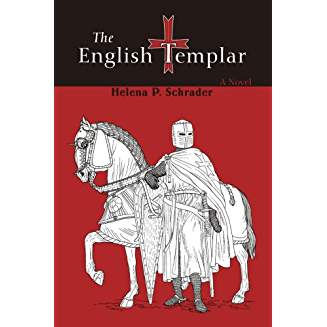
Despite what you might think after suffering through "Knightfall" there is actually some very good fiction that depicts the destruction of the Knights Templar without inventing fairy stories. Real Crusades History editor, Helena P. Schrader, wrote her own account of this historical event eleven years ago. The book is still available on amazon, albeit only in paperback: "The English Templar"


Below is a review by novelist Michael Schmicker 

Philip IV was one greedy royal.

Le Roi de fer (the “Iron King”) ruled France with an iron fist, financing his costly, incessant wars by shaking down the Church, Jews, bankers, and the Knights Templar. When Pope Boniface VIII protested His Royal Highness’s heavy tax on the clergy, Philip accused him of heresy and set up a French anti-pope, Clement V, under his thumb. When Lombard bankers who financed his fight with England demanded repayment of their loans, he expelled them from France and seized their properties. In 1306, he drove the Jews from France, then forced their debtors to pay the Crown instead. In 1307, he turned his avaricious eye on the assets of the Poor Fellow Soldiers of Christ and the Temple of Solomon (aka the Knights Templar) – a militant, monastic order created in 1120 to do good by protecting Christian pilgrims visiting the Holy Land. The poor soldiers did very well indeed over the following two centuries; by the time Philip moved against them, the Order owned valuable properties and assets throughout Christendom, including France.

On Friday the 13th October, 1307, Philip fell on them like a falcon on a rabbit.

"The English Templar" is a captivating fictional account of this shameful event, and its disastrous effects on a noble French family brave enough to hide Sir Percival de Lacy, an English Templar caught in Poitiers when Philip pounces.

Author and historian Helena Schrader knows her century and her subject; two of her novels – "Knight of Jerusalem" and "St. Louis' Knight" – were recently named Finalists for the 2014 Chaucer Award for Historical Fiction. They’re among a suite of well-received novels Schrader sets in the so-called “Age of Chivalry.” Barbara Tuchman’s National Book Award-winning work, "A Distant Mirror," exposed the sour truth of a medieval age wracked by senseless, unending warfare that spared no one. Schrader’s "English Templar" echoes the coarse brutality of this calamitous era, while shining a harsh light on a corrupt, morally-compromised, pre-Reformation Church complicit with Philip in applying the dreaded tortures of the Inquisition to destroy the Templars. She wisely balances the horrors of the day with a sweet love story. Young Felice de Preuthune falls slowly but inexorably for the outlaw Sir Percy, and vice-versa. Standing in the way is Umberto di Sante, an ambitious, unscrupulous, young cleric, determined to enjoy Felice as his concubine. The Pope has one; why shouldn’t he?

The Knights Templar have fascinated novelists as far back as Sir Water Scott. "Ivanhoe" (1820) showcased a Templar Knight as villain. More recently, Italian author Umberto Eco ("Foucault’s Pendulum") and writer Dan Brown ("The Da Vinci Code") profitably wove the legenday fraternity into best-sellers. Schrader successfully mines the same literary gold, crafting a compelling, expertly researched, and provocative tale of her own.

If the Middle Ages are your dish, don’t miss this delicious literary feast.

 Buy Now!

Dr. Helena P. Schrader holds a PhD in History.
She is the Chief Editor of the Real Crusades History Blog.
She is an award-winning novelist and author of numerous books both fiction and non-fiction. Her three-part biography of Balian d'Ibelin won a total of 14 literary accolades. Her most recent release is a novel about the founding of the crusader Kingdom of Cyprus. You can find out more at: http://crusaderkingdoms.com
 

Wednesday, February 21, 2018

Footnote on the Knights Templar: The Surprising Stand of Edward II of England

 As a final footnote to our series on the Truth about the Knights Templar, Dr. Schrader highlights the surprising stand of Edward II of England at the time of Philip IV's brutal attack on the Templars.
 
The Effigy of Edward II on his Tomb in Gloucester Cathedral

Edward II has not gone down in history as one of Britain’s greater monarchs.  He lacked the military effectiveness of his brutal father and suffered the humiliating defeat at Bannockburn. He was openly homosexual in an age when this was widely despised, illegal and a cardinal sin. He indulged his favorites and lavished favors on them – to the outrage of the magnates of the realm, who expected to be the recipients of royal favor. And, of course, he ended his reign ignominiously, abandoned by the bulk of his vassals and subjects, and forced to flee before the invading forces of his estranged queen, her lover, and his fourteen-year-old son.  But, for all his weaknesses and errors of judgment, he was not entirely unscrupulous or heartless, and he should be remembered with respect for his stance concerning the Knights Templar.

On the night of Friday, October 13, 1307, King Philip IV of France’s men broke into the commandaries of the Knights Templar throughout France and arrested everyone they found, whether knights, sergeants, and lay-brothers.  The Templars were accused of a catalog of heinous crimes from idolatry to sodomy. They were alleged to have cremated the bodies of their comrades (a sin in the medieval church) and then consumed their ashes. They were said to have roasted infants alive and eaten them as well.  Compared to these charges, the accusations of devil worship, blasphemy, corruption and deflowering virgins were almost child’s play. 

Modern historians agree that the charges were trumped up and motivated by Philip IV’s empty coffers. Philip IV used similar charges to justify confiscation of the property of the Jews and to remove Pope Benedict the XI.  Further evidence that he did not believe the vile charges against the Templars was Philip IV’s close association with them prior to their arrest.  Indeed, the day before the mass arrests, the Grand Marshal of the Templars was given a place of honor as pall bearer to the deceased wife of Charles of Valois, the king’s brother -- hardly the place for a man sincerely suspected of devil worship, cannibalism and sodomy, but Philip IV was nothing if not cold-blooded.


All those arrested, including the very men King Philip had treated as friends and advisors only months, days and even hours before, were subjected to brutal torture until they confessed to the catalog of crimes the French King had concocted. The tortures employed included tearing out men’s teeth, burning the soles off their feet (crippling many), suspending men by their wrists after tying their hands behind their backs, tearing off fingernails etc. etc. Between torture sessions, the arrested monks were held in dungeons with little (if any) light or air, given poor rations, and no access to sanitary facilities, so that many became ill, weakening their ability to withstand the torture further. The treatment was so brutal that no less than 36 Templars died under torture in the first week after the arrests. Most of those that did not die, however, eventually confessed to one or more of the charges against them. Only a few held out, while fifty-four Templars, who had the courage to retract the confessions torn from them under torture, were burned at the stake as “relapsed heretics.”

While this was all going on in France, the rest of Christendom was dumbstruck and amazed. Since the Templars were an international organization owing allegiance only to the pope, it was important for Philip IV to gain papal support for his actions, and to convince his fellow monarchs to follow his lead. Tragically, the Pope at the time lived in terror of King Philip IV, who had deposed his predecessor with accusations almost identical to those leveled against the Templars. He preferred to sacrifice the Templars rather than risk confrontation with King Philip. (The pope resided in Avignon at this time and was widely viewed as a prisoner or puppet of the French king.)

Enter Edward II of England, the son-in-law of Philip IV. A month after the arrests in France, Edward’s “dear” father-in-law sent a special envoy to him laden with documents that purported to prove the guilt of the Templars.  Edward’s reaction was to write to the Kings of Portugal, Castile, Aragon, and Sicily, denouncing the King of France. Edward rejected the charges against the Templars as monstrous lies, and reminded his fellow monarchs of the Templars service in the Holy Land and their “becoming devotion to God.” He urged the recipients of his letter to turn a deaf ear “to the slanders of ill-natured men.”

Edward also wrote to the pope urging him to open an independent inquiry, but the pope responded by ordering the arrest of the Templars.  Edward II received these papal instructions on December 15, 1307, but he delayed arresting the Templars until January 7.  This three week delay enabled many English Templars to “disappear,” – and possibly some of their portable wealth with them. But most “wealth” in medieval England was, of course, land and Edward II now made a virtue out of necessity and seized all Templar properties for the crown. One can hardly blame him. 

What I find remarkable and noteworthy is that even now he did not entirely abandon the Templars. When the pope insisted that the arrested Templars (those like the Master of England William de la More, who was determined to defend his Order, or those too old and feeble too escape) be tortured to force confessions, Edward of England blandly replied that torture was not part of English jurisprudence, adding that he didn’t have anyone in the kingdom experienced in such skills. (The English crown had resolutely refused to allow the Dominicans to introduce the Inquisition into England.)

For three years (!), Edward continued to resist demands that the Templars be tortured until the pope threatened him with excommunication – and sent ten of his best torturers to help the backward English crown. (Today we call it "capacity building.")  Edward caved in, but in a last gesture of loyalty, he told the torture team they were not to mutilate their victims, leave permanent injuries or cause violent effusions of blood. 

Edward of England enriched himself from the Templars, but, to the extent that he was able, he spared them from cruel and inhuman treatment. It is perhaps only a footnote in an otherwise sad and unlucky reign, but I think Edward still deserves to be honored for his stance on this issue. 

The last Grand Master and Marshal of the Knights Templar, Jacques de Molay and Geoffrey de Charney respectively, were burned at the stake for retracting their confessions, in the presence of King Philip, on March 18, 1314. 


In 2007 the Vatican officially declared the Templars’ innocent based on the evidence still in the Papal archives.

Sources:

Barber, Malcolm. The New Knighthood. Cambridge, 1994.

Howarth, Stephen. The Knights Templar. New York, 1984.
Robinson. John. The Knights Templar in the Crusades. London, 1991.
Sanello, Frank. The Knights Templar: God’s Warriors, The Devil’s Bankers. New York, 2003.

 Dr. Schrader's novel The English Templar is set against the background of the destruction of the Knights Templar.


BUY NOW!

Dr. Helena P. Schrader holds a PhD in History.
She is the Chief Editor of the Real Crusades History Blog.
She is an award-winning novelist and author of numerous books both fiction and non-fiction. Her three-part biography of Balian d'Ibelin won a total of 14 literary accolades. Her most recent release is a novel about the founding of the crusader Kingdom of Cyprus. You can find out more at: http://crusaderkingdoms.com

Sunday, September 24, 2017

5 Facts About the Knights Templar


Fact #1:

The Knights Templar were an order of warrior monks founded in the Holy Land in the aftermath of the First Crusade. Although the Crusaders had conquered Jerusalem from the Fatimid Caliphate in Egypt, the surrounding territory was still perilous, and pilgrims faced the danger of Saracen raiders as they journeyed to the holy sites. To protect Christian travelers, a group of knights, led by Hugh of Payn and Godfrey of Saint-Omer, decided to form an order of brother knights in 1119. This order would take all the regular vows of a Christian monk – poverty, chastity, and obedience – but with an added vow: to protect the Christians of the Holy Land, and to defend the Holy Sepulcher – the tomb of Christ in Jerusalem. The King of Jerusalem, Baldwin II, granted Hugh and Godfrey’s order a base in his palace, located in Jerusalem to the south of the Temple of the Lord (the name given by the Crusaders to the Dome of the Rock). It is from their home base that these warrior monks take their name – Poor Fellow-Soldiers of Christ and of the Temple of Solomon, or the Knights Templar.

Fact #2:

The Knights Templar were incredibly effective and skilled warriors. They were highly trained, and their discipline made them a very cohesive and formidable fighting force. The Templars excelled at the heavy-cavalry tactics that dominated the Latin Christian military culture of that era.
At the Battle of Montgisard, for example, in 1177, the Templars were instrumental in defeating a much larger force under the powerful Muslim ruler Saladin.
The Templars could also be very valuable in a disaster, such as during the Second Crusade, during the Battle of Mount Cadmus in 1148, when the army of King Louis VII of France was badly defeated by the Seljuk Turks. In contrast to Louis’s poorly organized divisions, the Templars maintained strict discipline, and their good order resisted the Turks just enough to prevent what might have been a total annihilation of Louis’s army.
The Templars were involved in many other great victories as well, such as the Battle of Arsuf in 1191 during the Third Crusade, when the Templars commanded the vanguard, and their well-formed cavalry lines smashed Saladin’s troops.

Fact # 3:

There is no evidence that the Templars were ever involved in any sort of blasphemous secretive activity – such ideas arise purely from the realm of stories and fiction. All evidence points to the Templars having been a thoroughly Orthodox and devout order loyal to the Christian religion. Indeed, the very idea of the Templars as some mysterious secret society devoted to esoteric knowledge is not consistent with history. Rather, they were a very practical and straightforward organization, dedicated to military matters. They were, in many ways, the marines of their era.

Fact #4:

Throughout their history the Knights Templar were quite popular all over Christian Europe. Europeans so believed in the idea of defending the Holy Sepulcher that the Templars became a favorite recipient of donations and grants, so that by the mid twelfth century the order was incredible wealthy and powerful, with houses all across Europe, and robust military establishments on the frontiers of Christendom in the Holy Land and in Spain and Portugal.
            The Templars expanded their operations to help pilgrims, so that now they not only aided pilgrims as they arrived in Palestine, but in Europe they could help pilgrims to organize their journey. The Templars established a banking system in which pilgrims could deposit money with the Templars in Europe, then withdraw those funds for use when they arrived in the Holy Land. Thus the Templars invented key aspects of modern banking.
            The Templars became so renowned for their management of finance that some of Europe’s highest ranking members of society began to seek them out to manage their money – including kings and bishops.

Fact #5:

By the early years of the fourteenth century, the King of France, Philip IV, was heavily in debt, and looking for a source of cash. He began eying the wealth of the Templars. Thus, in 1307, Philip concocted a series of baseless, trumped-up charges against the Templars and had them arrested throughout his Kingdom and their assets seized. By this era, the King of France was considerably more powerful than the Pope, and so Philip was able to bully the Pope into disbanding the Templars as an order recognized by the Church. Outside of France the Templars were absorbed into other orders, but within France Philip had many Templars put to death by burning at the stake. The final Grand Master of the Templars, Jacques de Molay, refused to give credence to Philip’s false charges, and went to his death calling on God to punish the King of France. Jacques’ final curse came to fruition: the same year that Jacques was burned alive – 1314 – King Philip IV suffered a cerebral stroke while out on a hunting trip. He lay in agony for weeks, finally dying on November 29th. The legend immediately sprang up that Philip’s death was the result of the Grand Master’s curse.